The Complete Guide to Travelling the Peloponnese by Car
Published by TheLocals · thelocals-greece.com
The Peloponnese is not a destination you visit in a day. It is a landscape you need to move through — slowly, by road, stopping where the light is right and the taverna has no menu.
Most people who visit Greece never leave Athens, Santorini, or Mykonos. The ones who do — the ones who rent a car and drive south from Corinth — tend to say the same thing: this is the Greece I was looking for.
The Peloponnese is the landmass south of Athens, connected to the rest of Greece by a narrow strip of land at Corinth. It is the birthplace of the Olympic Games, the site of some of the best-preserved ancient ruins in the world, and home to a coastline that most Europeans have never seen. It is also, by any measure, one of the most spectacular road trip destinations in Europe.
This is the guide we wish existed when we started. Routes, distances, where to sleep, how long you need, and what you will find when you get there.
Why a car is essential
The Peloponnese is not a place you can see by bus or train. The rail network is minimal. The distances between the best places are manageable — rarely more than two hours between major stops — but the roads in between are part of the experience. The drive from Mani to Monemvasia alone, hugging the eastern coast with the sea on your left and the mountains on your right, is worth the flight.
A car also gives you the flexibility that the Peloponnese rewards. The best taverna in Nafplio is not on Google Maps. The beach before Stoupa that has no name. The road off the main route that takes you through a village where old men play backgammon outside the only café. None of this is accessible without a car.
The route: how to structure your journey
There are two logical starting points depending on how you are flying in.
Starting from Athens airport
Drive south on the E65. Your first stop is Ancient Corinth — about one hour from the airport. This is where most Peloponnese journeys should begin. The ruins of Ancient Corinth, the fortress of Acrocorinth rising 575 metres above the plain, the Corinth Canal viewpoint. Give it half a day, then continue to Nafplio.
Starting from Kalamata airport
Kalamata has an international airport with seasonal direct flights from several European cities. If you land here, start in Kalamata itself — the olive oil capital of Greece, with a beautiful waterfront and a good food scene — then work your way east.
The five hubs
Rather than a hotel a night, the Peloponnese works best with base camps — places you sleep for two or more nights while exploring the surrounding area on day trips. These are the five we consider essential.
12 nights
Ancient Corinth & Nafplio
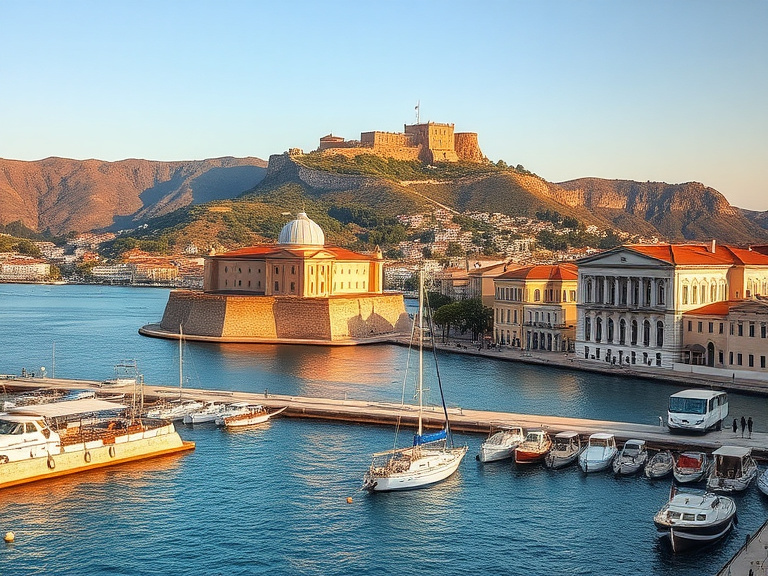
Nafplio is probably the most beautiful town in Greece that most people have never heard of. Venetian architecture, a harbour overlooked by a massive fortress (Palamidi — 999 steps, worth every one), and an old town of neoclassical buildings that feels like a film set. From here you can do Mycenae in the morning (40 minutes away) and Epidaurus in the afternoon — the best-preserved ancient theatre in the world, with acoustics so perfect you can hear a pin drop from the top row.
Ancient Corinth is your gateway hub — one hour from Athens airport, it sets the historical tone for the whole journey. The ruins are excellent. Acrocorinth is extraordinary.
22 nights
Monemvasia
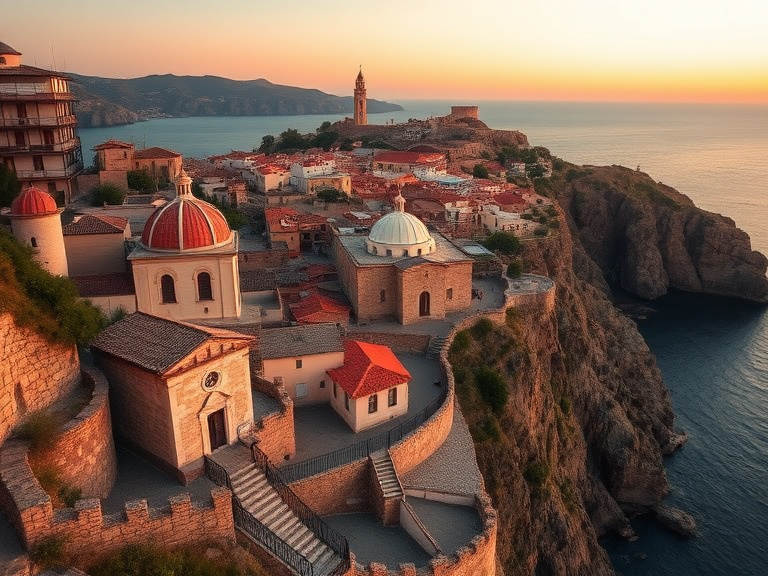
Monemvasia is a medieval fortress town built on a rock that rises from the Aegean. A single road connects it to the mainland. The lower town is a labyrinth of stone lanes, Byzantine churches, and small hotels carved into the rock. There are no cars inside the walls. In the evening, when the day-trippers have gone, it becomes one of the most atmospheric places in Europe.
Do not skip the Upper Town — the ruins of the fortress above, with views across the open sea, are the image you will carry home.
32 nights
Mani
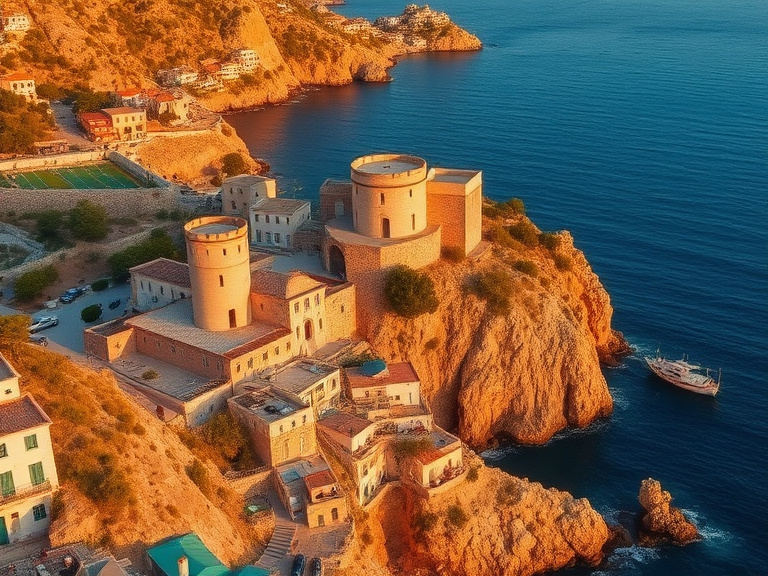
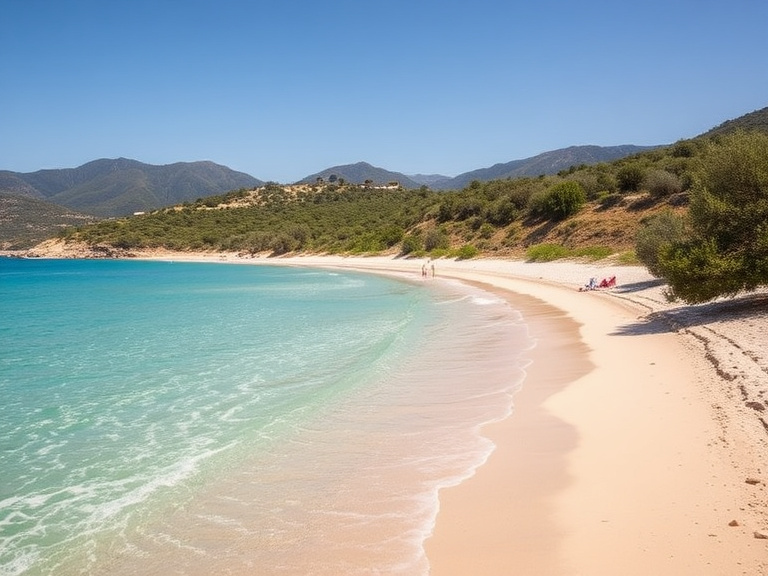
The Mani peninsula is the middle finger of the three that extend from the bottom of the Peloponnese. It is unlike anywhere else in Greece — a semi-arid landscape of stone tower villages, built by families who fought each other for centuries and needed the height advantage. The coastline is dramatic: turquoise coves accessible only by boat or a steep path down.
The Diros Caves are one of the great natural wonders of Greece — a vast underground lake you navigate by rowing boat through prehistoric stalactites. Book ahead. The cave at Cape Tainaron, the southernmost point of mainland Greece, is a fifteen-minute hike and completely deserted.
42–3 nights
Kalamata
Kalamata works as both an arrival city and a base for the western Peloponnese. The city itself is livelier than most Peloponnese towns — a long beach promenade, good restaurants, a market where the famous Kalamata olives are sold at source. From here you reach Ancient Messene (one of the most under-visited archaeological sites in Greece), Stoupa beach, and the villages of the Mani.
51–2 nights
Methoni
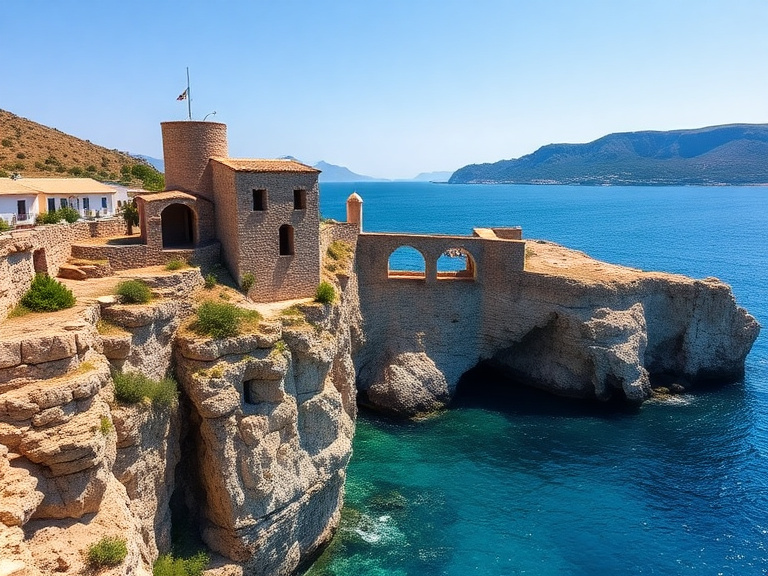
Methoni is a small Venetian harbour town most people drive past without stopping. They should not. The Venetian castle at the tip of the headland — built over the sea, connected by a stone bridge — is one of the most visually striking fortifications in Greece. Sleep here one night and you will have it almost entirely to yourself.
Driving distances and times
Athens airport→Ancient Corinth
85 km1 h
Ancient Corinth→Nafplio
65 km1 h
Nafplio→Monemvasia
145 km2 h
Monemvasia→Mani (Areopoli)
95 km1.5 h
Mani→Kalamata
70 km1.5 h
Kalamata→Methoni
60 km1 h
Methoni→Athens airport
310 km3.5 h
How many days do you need?
The minimum to do the Peloponnese justice is six nights. This gives you two nights in the Corinth–Nafplio cluster and two nights each in Monemvasia and Mani. You will feel like you have barely scratched the surface but you will have seen the essential things.
Seven to eight nights is the sweet spot — enough time to slow down, to take the unplanned road, to spend a morning doing nothing in a harbour. Nine nights or more and you begin to understand why some people come for a week and stay for a month.
When to go
May, June, September and October are the ideal months. The weather is warm, the crowds are manageable, and the light in the late afternoon is extraordinary. July and August are hot — 35°C+ is normal — and parts of the coast can be busy. The Peloponnese in spring, when the wildflowers are out and the mountains still have snow, is something else entirely.
The Peloponnese never fully closes. Many hotels and experiences operate year-round, and a winter visit — quiet, cool, the ruins to yourself — has its own reward.
A note on how we think about this route
TheLocals was built specifically for this kind of travel. Not a single hotel, not a package tour, not a list of things to do in each city. A journey — a curated route through the Peloponnese, with handpicked accommodation, experiences led by local providers, and a car to connect everything.
If you are planning a Peloponnese trip and want it designed rather than searched, this is what we do.